
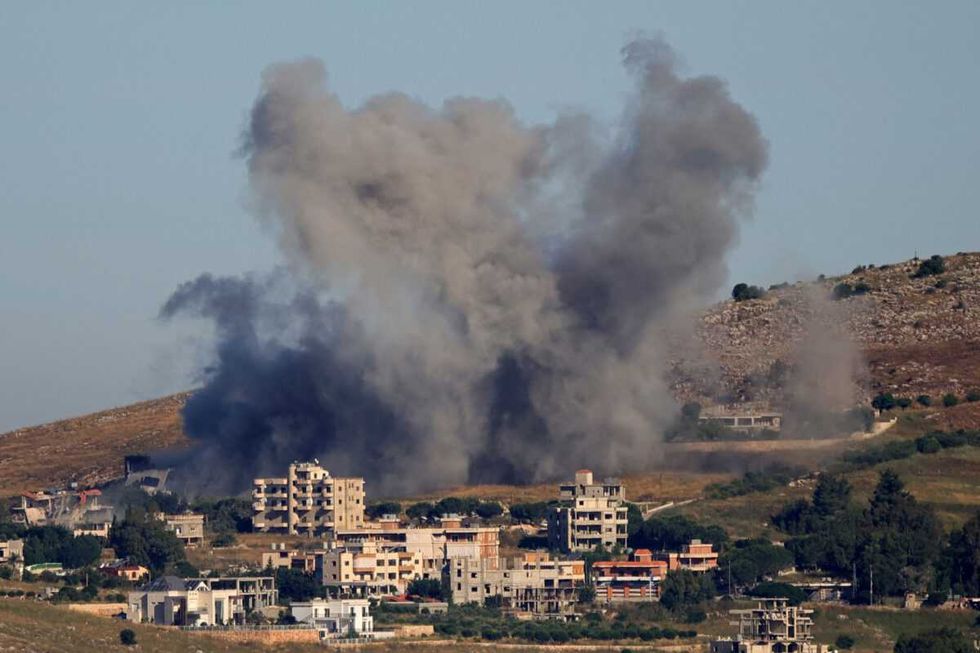
Lebanese official media reported Israeli airstrikes in the country's south on Thursday, hours after Israel and Lebanon agreed to implement a conditional ceasefire following talks in Washington.
Lebanon's state-run National News Agency (NNA) reported drone strikes along roads at several southern locations, saying at least one caused casualties.
What did Israel and Lebanon agree to in the ceasefire deal?
Israel and Lebanon agreed to implement a ceasefire on the condition that Hezbollah completely halt all fire, according to a joint statement after a fourth round of US-led talks in Washington on Wednesday.
The two sides also agreed to create pilot zones where the Lebanese armed forces would take exclusive control of territory, excluding all non-state actors. Israel and Lebanon do not have formal diplomatic relations.
How did Israel and Hezbollah respond to the ceasefire announcement?
Israel's far-right National Security Minister Itamar Ben Gvir criticized the deal on Thursday, calling it a "serious mistake."
Earlier that morning, the Israeli military said air raid sirens had sounded in northern Israel, with one incident involving a suspicious aerial target resolved and another found to be a false alarm.
Hezbollah, for its part, said it had launched a salvo of rockets at Israeli soldiers and vehicles in south Lebanon's Qantara before the announcement, and fired drones at troops near the strategic Beaufort castle.
Has a previous Lebanon ceasefire been violated?
A prior ceasefire meant to take hold on April 17 has never been observed, with both sides justifying their ongoing attacks by citing the other's alleged violations.
The World Health Organization said last week that more than 600 people had been killed in Lebanon since that truce. Senior Hezbollah official Mahmud Qomati told AFP this week that the group would "not accept a partial ceasefire."
Lebanon says Israeli attacks have killed more than 3,500 people since Hezbollah drew the country into the wider Middle East war on March 2, when it fired rockets at Israel in retaliation for US-Israeli strikes that killed Iran's supreme leader.