
Israel and Lebanon agreed Wednesday to implement a conditional ceasefire following US-led talks in Washington.
The deal requires a "complete cessation" of fire by Hezbollah and the evacuation of the group's operatives from southern Lebanon, according to a joint statement released after the negotiations.
What is the Israel-Lebanon conditional ceasefire agreement?
The ceasefire agreed in Washington is contingent on Hezbollah halting all attacks and withdrawing its operatives from southern Lebanon. Both sides also agreed to establish "pilot zones" where Lebanese armed forces will take exclusive territorial control, excluding all non-state actors. Further talks are scheduled for the week of June 22 toward a comprehensive agreement.
What happened during talks in Washington?
Wednesday's meetings were the fourth round of direct talks between Lebanese and Israeli diplomats since fighting erupted on March 2, when Hezbollah renewed attacks against Israel in support of Iran. The two sides, which do not maintain formal diplomatic relations, issued a joint statement committing to further negotiations. Both parties said they would meet again the week of June 22 "with a view toward reaching a comprehensive agreement."
Earlier in the day, US President Donald Trump said he wanted to separate Lebanon talks from negotiations over the war with Iran. Tehran has insisted the two conflicts are linked. Iranian Foreign Minister Abbas Araghchi warned that any attack on Beirut would trigger a "full-scale resumption" of war.
Are hostilities continuing despite the ceasefire deal?
Cross-border attacks continued on Wednesday despite the agreement. The Israeli military said it intercepted a "hostile aircraft" and two projectiles that crossed from Lebanon into Israeli territory. Hezbollah said its fighters launched a rocket barrage at soldiers in northern Israel, describing it as a response to what it called Israeli ceasefire violations.
A truce meant to halt the fighting was supposed to take hold on April 17 but has never been observed. Both sides have justified ongoing attacks by citing alleged violations from the other. Senior Hezbollah official Mahmud Qomati told AFP on Tuesday that the group would "not accept a partial ceasefire."
What are the civilian and military casualties in Lebanon?
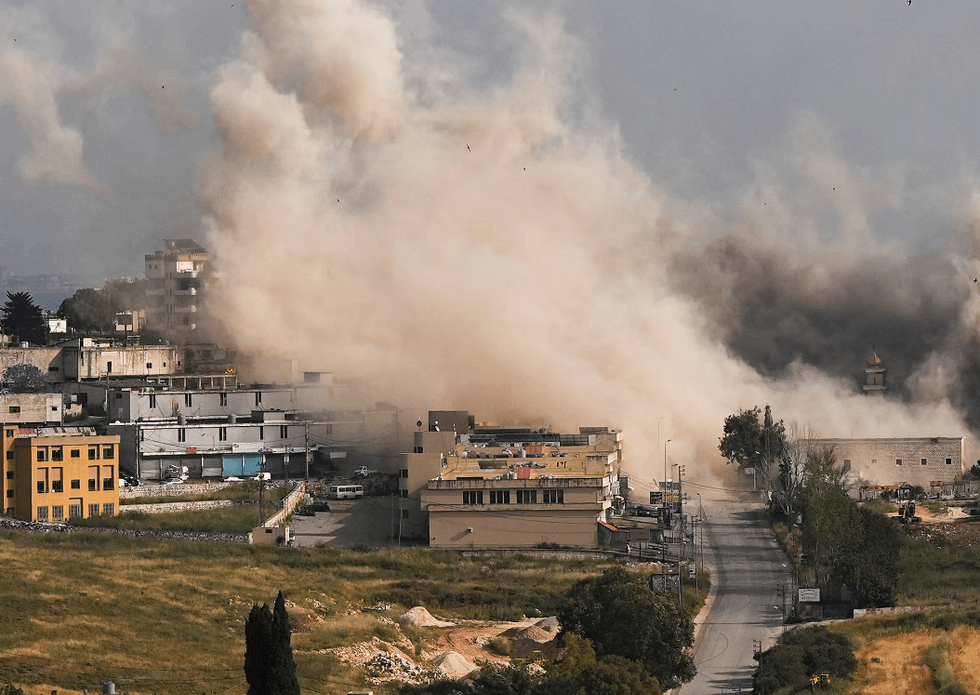
Israeli strikes on Wednesday killed at least nine people in southern Lebanon. Among them, the Lebanese health ministry said an Israeli strike targeted an ambulance, killing two paramedics from the Risala Scouts Association, which is affiliated with Hezbollah's ally the Amal movement. At least 130 emergency and health workers have been killed since the fighting began.
The health ministry also said an attack on Al-Hawsh near the city of Tyre killed four Syrians and two Palestinians. An Israeli military spokesperson told AFP that forces were "not aware of any such attack having occurred in the area." Lebanon's army said a soldier was killed in a separate Israeli strike, with an officer and another soldier wounded in an attack on a military vehicle. The army condemned what it called Israel's "deliberate targeting of army personnel, vehicles and positions."
What is the situation in Tyre and southern Lebanon?
Israel's military alleged on Tuesday that Hezbollah members were operating in Tyre's Christian quarter and warned residents to leave if the group remained there. An AFP correspondent reported the situation in Tyre was relatively calm Wednesday morning, with some residents who had sheltered in cars or tents at the edge of the Christian quarter moving to other parts of the city.
A petition calling for Tyre to be declared an "open city," free of armed presence and with Lebanese military deployed there, has gathered more than 180 signatures, including local lawyers and intellectuals. Some signatories have faced online attacks for their stance. A similar petition concerning Nabatieh, another large southern city under Israeli attack, has drawn more than 200 signatures.
Israel has recently escalated its attacks and is conducting its deepest ground offensive into Lebanon in two decades.