
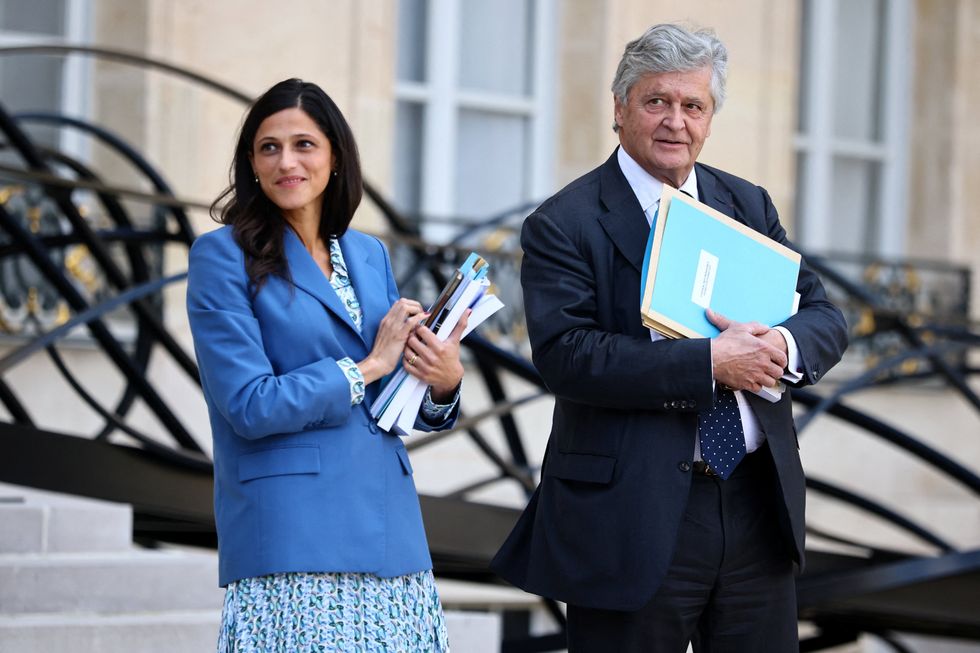
France will continue pressing the World Bank to maintain its climate finance commitments despite U.S. pressure to abandon them, new French development minister Eleonore Caroit said Friday.
Speaking on the sidelines of the World Bank and International Monetary Fund annual meetings in Washington, Caroit said climate action would also be a central theme of France’s 2026 presidency of the Group of Seven leading economies.
Caroit, appointed Sunday to Prime Minister Sebastien Lecornu’s cabinet as junior minister for Francophonie, international partnerships and French people abroad, flew directly to Washington after her nomination.
France defends 45% climate goal
Caroit said she discussed the issue with U.S. Treasury Secretary Scott Bessent, who has urged the World Bank to drop its goal of raising climate-related lending to 45% of total financing, up from 35% under the Biden administration.
“So we obviously continue to support the 45% objective,” Caroit said, noting that France wants to preserve targets consistent with the Paris climate accords, which Trump’s administration exited again in January.
“For us, climate is of the utmost importance because we’re aligned with the bank’s objective of development and job creation, but it has to be jobs on a livable planet,” she added.
Clash over the World Bank’s direction
In 2023, World Bank President Ajay Banga steered shareholders toward a new mission statement: “A world free of poverty on a livable planet,” cementing the lender’s focus on climate alongside development.
Bessent dismissed the phrase as “vapid, buzzword-centric marketing” and urged the bank to resume financing coal, gas, oil, and nuclear projects. In his remarks to the IMF’s steering committee, he said the climate target “skews projects away from country priorities.”
Caroit said she favored continued dialogue. “It’s important to have frank conversations and see where the disagreements are,” she said, noting Bessent’s openness to renewable energy “where it makes economic sense.”
Areas of alignment
The minister said both countries share support for nuclear energy, citing France’s reliance on its 50-plus reactors that generate over 70% of its electricity.
She added that climate adaptation and resilience projects—such as flood or wildfire prevention—could serve as common ground between the U.S. and France. “This is what we call climate, and they can call it however they want,” she said.
Despite disagreements, Caroit said France and the U.S. remain committed to maximizing development impact amid fiscal constraints. “We all acknowledge that there’s a need to rethink the whole architectural and financial structure,” she said.